Why Just Building Links Doesn't Work Anymore
When it comes to building an online presence, many brands still believe they can take the easy way out.
Although the icky days of black hat SEO and link-stuffed copy have gone the way of the dinosaurs, it’s not uncommon for a new or budding company to (still) think they’ll succeed by rattling off cheap, backlink-stuffed online content.
This couldn’t be further from the truth.
Today, readers (and Google) are more discerning than they’ve ever been, and the only way to build an online presence that lasts is to create content designed to offer genuine value and relevance to both of them.
I’m not talking about cheap, one-off, thoughtless stuff meant to drive quick rankings. I’m talking about thoughtful, in-depth, relevant content that offers something real.
Today I’m sharing why building links alone doesn’t work anymore, and the types of content you should absolutely be investing in to seriously grow your online presence. Ready?
Why just building links doesn’t work anymore
Even people who know virtually nothing about SEO, content quality or engagement know one thing: links are supposed to help you get noticed online.
In some ways, this is true. In others, it couldn’t be more off base.
Yes, high-quality links can help Google determine the authority and relevance of a page. They can also provide context for your readers and help you make valuable SEO connections between the pages on your site.
Low-quality links, however, can hurt your SEO more than they help it. And this is by design rather than by accident.
Here’s why: years ago, black hat SEOs made their fortunes manipulating search results. They did this by buying links or working dozens of them into spammy pages. Google, not surprisingly, didn’t love this, and developed an algorithm update to address it.
The change went by the name of the Penguin update, and it went into effect in April 2012. Designed to punish sites that use spammy backlink strategies, Penguin sought to ensure that sites focusing on links were doing so for quality and relevance rather than perceived SEO gains.
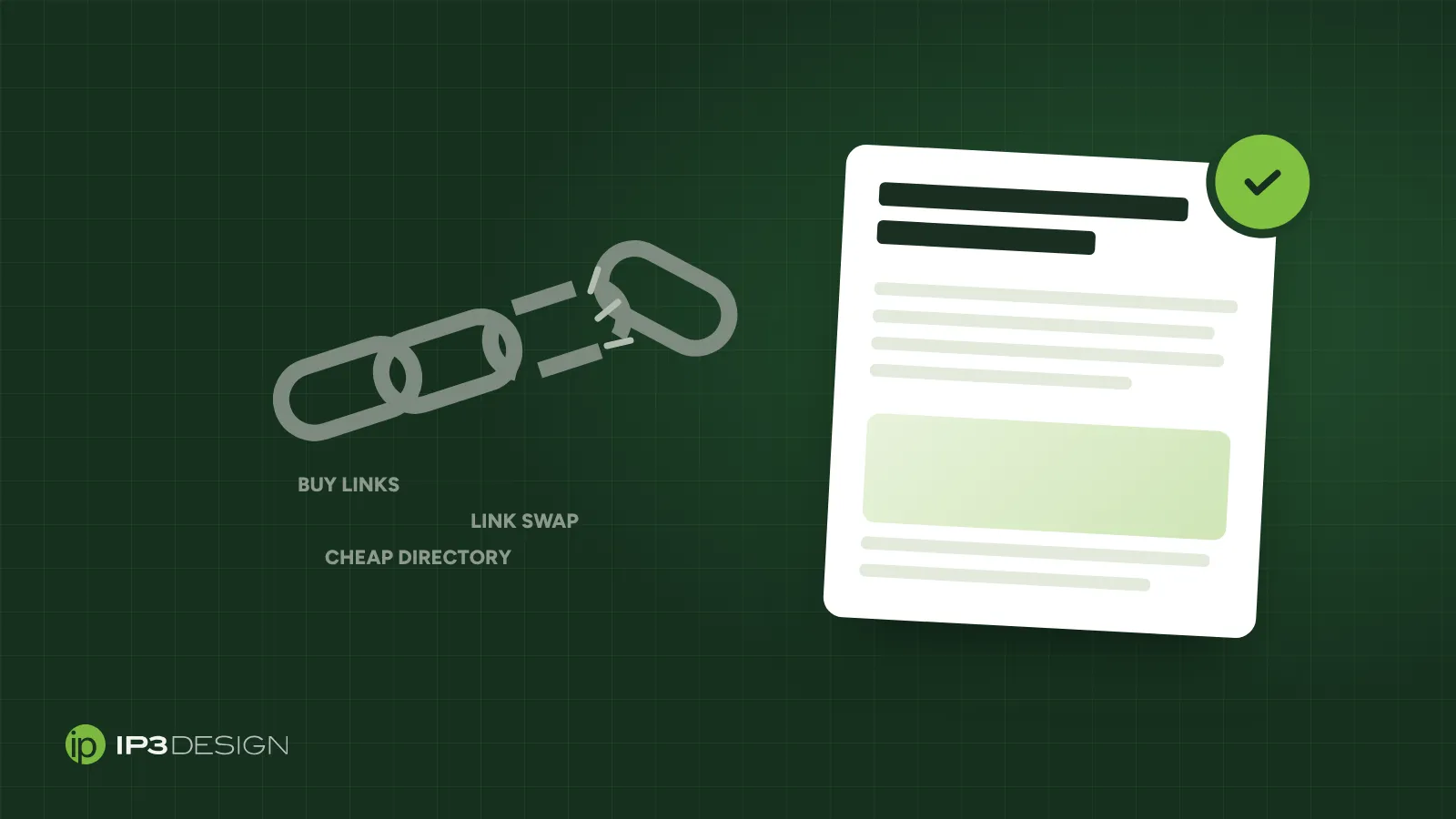
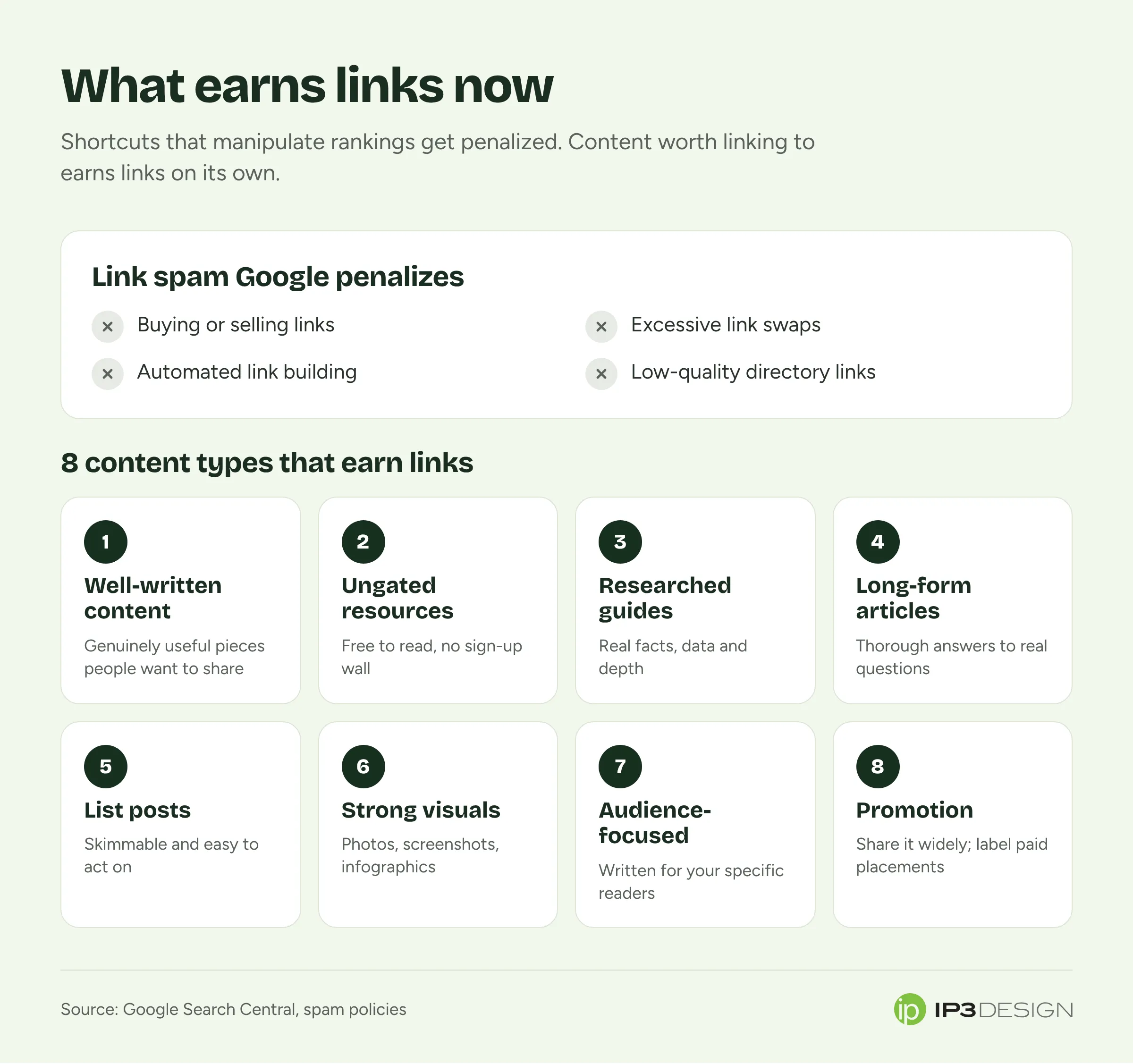
Today, sites that use spammy backlink strategies pay for it in the form of Google penalties and decreased respect online. Google’s spam policies spell out what counts as link spam: buying or selling links to influence rankings, excessive link swaps, using automated programs to build links, and links from low-quality directories, among others.
What’s more, cheap, link-hungry sites are falling out of favor with content creators everywhere, and many teams and individuals simply refuse to create content that doesn’t provide value beyond its backlinks.
But the crazy part is that the marketer who thinks low-quality content will work still exists.
Are marketers still creating content for links? Sadly, yes
My team once got a request from a marketer to create content “just for backlinks’ sake.” The project consisted of web pages for local dentists.
We don’t create content like that. So we sent him a quote for engaging content written for the reader as well as for Google, not content created secondary to a link.
We turn people like this elsewhere because:
- At the rates they offer, it’s impossible to retain knowledgeable writers.
- Writing this content would mean lowering every standard we hold for our other clients who receive engaging copy.
What’s more, this content would add no value to the web as a whole.
But there’s a silver lining to this story. The marketer came back to us a month later and invested in higher-level services, including our keyword strategy. He also asked our advice on creating local, geo-targeted content for his clients.
Holding to high standards will win in the end in content marketing.
8 content types that will boost your online presence
So if spammy, backlink-stuffed content doesn’t earn links, what does?
The answer varies and depends in large part on your goals. With that in mind, here are the top types of content that earn links and help you get noticed online.
1. Engaging, well-written content
By far the best type of content for links is simply high-quality material, what’s sometimes called old-school link bait: content so good that people want to point others to it. When publishers develop fantastic content, they can put it online, publicize it to a few select sources such as the best influencers in their industry, and then let the results roll in.
Unlike content made for the sole purpose of claiming links, quality content is intended first for relevance and value and second for SEO. Its value is bone-deep, which is why it succeeds so dramatically.
Google says as much in its guide to creating helpful, people-first content, which encourages content made primarily for people rather than to manipulate search rankings.
In many ways, value is the golden rule of the entire content ecosystem. Whether you’re trying to attract readers, earn links or boost your SEO, quality and value are the foundation, and everything else builds from there.
2. Non-gated content resources
There’s a long-running debate about whether to gate content, but free, ungated content will earn you the most value in terms of links. Gated content can be great for gathering information from leads, but free content is where it’s at for any company looking to build its online presence. Marketing strategist David Meerman Scott has reported that ungated content can earn many times more downloads than gated content.
So keep the majority of your content ungated and open to the public. Combine that with the first tip (quality first, always) and you’ll have a bulletproof strategy for links, engagement and brand recognition.
3. Extensively researched guides
People go online looking for valuable content that teaches them something new. Content with deep research, plenty of usable facts and statistics, and opinion-forming material is highly likely to be linked to and shared.
Many marketers believe this kind of content is impossible in their industry, but research-dense content is achievable in virtually any field. Provide in-depth, well-researched content to your followers and you’ll reap the rewards in shares and links.
A few well-known examples of guide content that performs well in shares, reads and rankings:
- Moz’s Beginner’s Guide to SEO
- Quicksprout’s Advanced Guide to Content Marketing
Be warned: this type of content can take a lot of time and money. Research, copywriting, design and graphics for a set of in-depth guides can easily run into five figures.
4. Long-form blogs
When it comes to blogging, long-form content tends to outperform shorter material. Most text content on the web is under 1,000 words, yet in-depth articles of 2,000 words or more consistently earn more links and attention.
Shift your content strategy toward long-form content. Because it provides value and relevance and features extensive research, it’s highly likely to perform well with your audience and help you build an online presence that lasts.
Worried about where you’ll find topics to flesh out longer content? Look to your website’s comments and FAQ page, third-party sites like Quora, relevant social media groups, or current events.
5. List-style posts
List posts are famously shareable, and while they may seem a bit cliché, they’ll help you get noticed. Lists are readable, actionable and skimmable, which makes them valuable to readers. When a reader comes across a list post, they know the information is organized into digestible pieces they can act on immediately.
Try incorporating numbers into your blog headings. Some marketers dislike the formulaic nature of lists, but they work, which makes them a worthwhile part of your content strategy.
6. Content with great visuals
Images are a powerful addition to any content marketing strategy and a great way to earn links and views. Color visuals make people far more willing to read a post, and many marketers name visual material as their single most important content asset.
Don’t hesitate to add visuals to your content. A well-placed series of screenshots, some great photography or a custom infographic adds significant value and may be exactly what you need to earn the attention (and links) your brand has been working for.
7. Content that caters to your target audience
I’ve said it before and I’ll say it again: understanding your target audience is essential to creating content that earns links and shares.
Content targeted directly to your readers is more relevant, specific and valuable than less targeted content, so it will go furthest in earning you the views and attention you deserve.
8. Promoted and sponsored content
Content that isn’t promoted often goes unnoticed. The web is so vast that unpromoted content tends to sink to the bottom, never to be seen again. Fortunately, you can avoid this by promoting it.
By promotion, I don’t mean a few half-hearted social media updates. You’ll need to check these boxes:
- Reach out directly to the biggest influencers in your industry, especially any you’ve mentioned in your content
- Share your content several times on social media for the widest exposure
- Share it in relevant online groups, communities and forums
- Use relevant, trending hashtags
One important caution if you pay for placement, such as sponsored articles, advertorials or paid guest posts: Google’s spam policies say paid links must be marked with a rel="sponsored" or rel="nofollow" attribute so they don’t pass ranking credit. Paying for links that do pass ranking credit is exactly the kind of link spam Penguin was built to catch. Sponsored content is great for exposure, as long as it’s labeled honestly.
Engaging content remains the foundation of your brand’s growth online
For years, the widespread assumption has been that content exists to help you rank, first and foremost. That’s partly true, but also heartbreakingly false. Content does help you rank when you do it well, but that’s a secondary effect of its true purpose: delivering relevance and value to your readers.
Search engines and users have evolved to the point where low-quality content just isn’t interesting anymore. Search engines aren’t interested in backlink-stuffed material that does nothing but clog up the web.
Instead, they want real, well-researched, long-form content that actually adds something to the web.
Bad content is easy to create, and many people, like the marketer in my example, believe it’s the golden ticket to great rankings. But good content is the way forward. It’s the only way to get noticed online today.
Cheap content no longer serves a purpose online.
Updates like Penguin, combined with shifting consumer expectations, have made it clear that getting noticed online takes skill and attention, not brute force.
Marketers who focus on the types of content that drive results (promoted content, free content, research-dense content, list posts, visual posts and long-form material) will be well placed. These all need to work together in a solid content strategy, and they’re a great place to start.
Need help building content that ranks?
At IP3 Design we plan and write content that earns rankings the right way, as part of our SEO services. If most of your customers are nearby, local SEO gets you into the Google Maps results too. Get in touch for a free consultation.